

Roles
Bringing DCS, SCADA and PLC platform specialists to Australian sites
Instrumentation and control system specialists brought into Australian plants for commissioning, upgrades or fault finding generally come in on a Subclass 400 for defined work, or a Subclass 482 for an ongoing role. Expertise in a specific platform is usually the core of the case. Resource Visa prepares these applications for Australian operators, systems integrators and OEM service divisions.
Every engagement starts with an employer. We don’t take on individuals seeking a visa on their own. If you need help with your own visa, you can search the Register of Migration Agents at mara.gov.au.
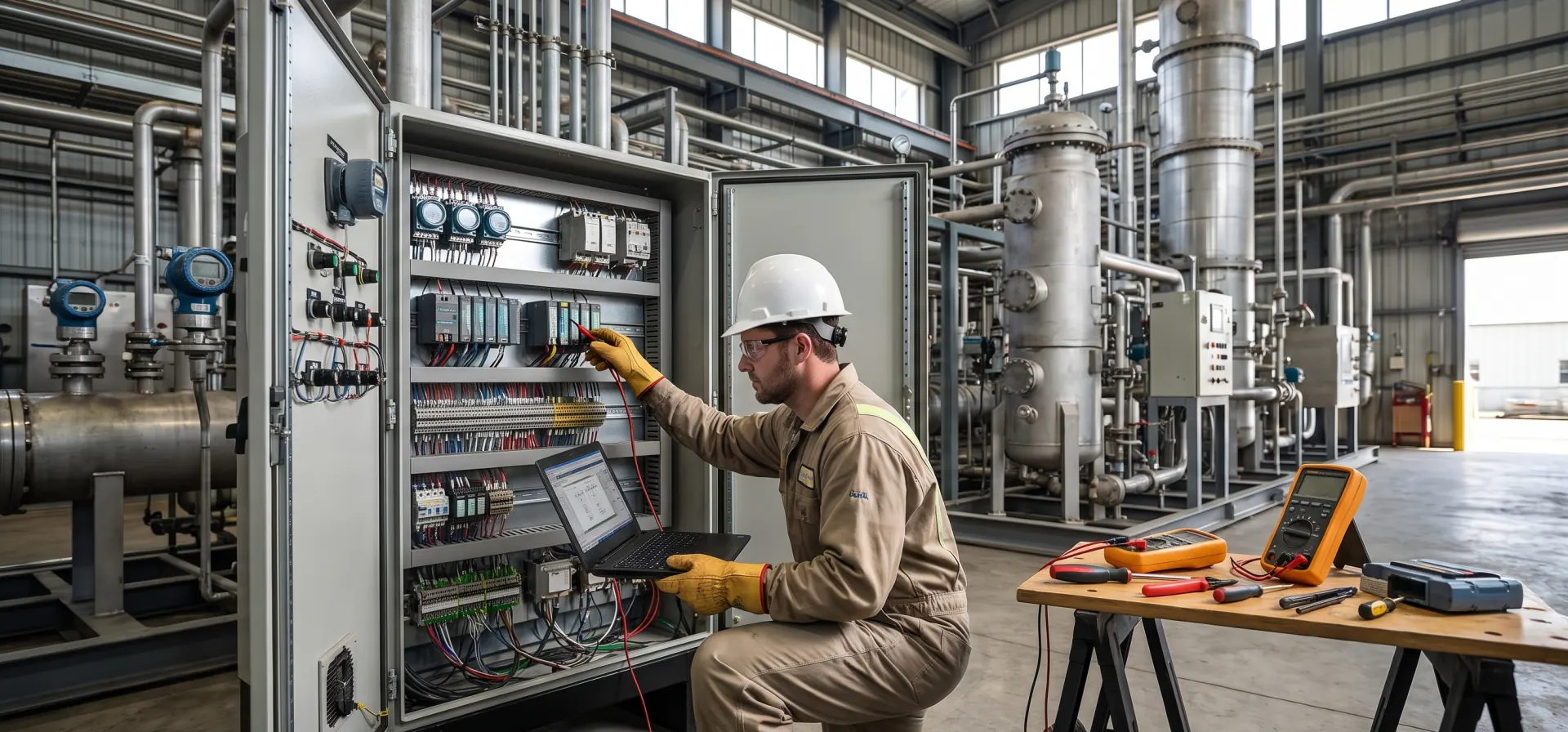
Platform specialists
Why control system work so often needs a specific overseas specialist
Control platforms are vendor-specific, and expertise doesn’t transfer cleanly between them. A specialist in one DCS family, on one version, is not interchangeable with a specialist in another. When a plant needs a migration, an upgrade or a fix on a live system of a particular age, the pool of people who can do it safely is genuinely small. Often they work for the vendor or a specialist integrator overseas.
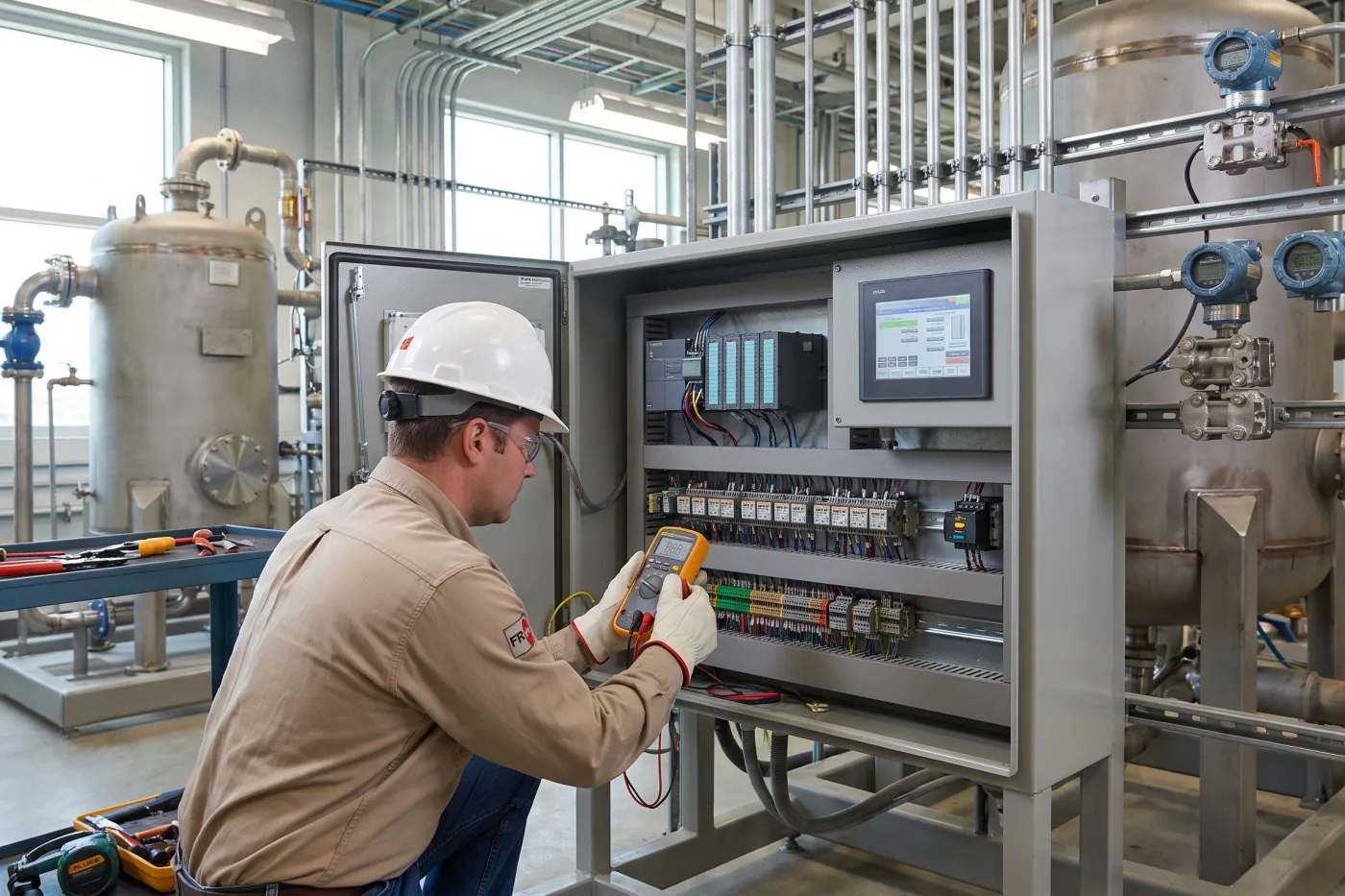
Who it’s for
Who this page is for
- Operators of processing plants, LNG trains, mine sites and power stations
- Systems integrators delivering control system projects in Australia
- OEM and vendor service divisions sending platform specialists to customer sites
Scope of work
The work this covers
- DCS, SCADA and PLC commissioning, configuration and fault finding
- Safety instrumented systems and functional safety work
- Field instrument calibration and loop testing
- Control system migrations and upgrades
The right visa
Which visa applies to instrumentation and controls technicians
For defined, specialised work, the Subclass 400 Temporary Work (Short Stay Specialist) visa generally applies, employer-backed, no sponsorship approval needed.
Normally up to three months in any 12-month period, counting every 400 stay with any employer. Up to six months only in exceptional circumstances, on strong evidence. A specialist who has already spent time in Australia on a 400 in the last 12 months may be granted only the balance, so offshore and FIFO rosters that add up to more than three months a year need a different visa. We establish the specialist’s full 400 history before anything is lodged.
For an ongoing role, the pathway is the Subclass 482 Skills in Demand visa. The Specialist Skills stream is open to most occupations where the salary meets its income threshold. It isn’t available for technicians and trades workers, machinery operators and drivers, or labourers, whatever the salary. If the specialist stays employed by an overseas business, a 482 needs that business to hold its own sponsorship approval, which is available only for limited purposes such as setting up an Australian operation or fulfilling a contract. Otherwise the worker is employed in Australia.
The evidence
Name the platform and the version
Platform and version
“Instrumentation technician” is generic. A specialist in a named DCS family, on a named version, with the vendor’s certification, isn’t. Say exactly which system it is.
Functional safety
Where safety instrumented systems are involved, functional safety certification (for example, work to IEC 61511) is separate again. State it.
The cost of the plant not running
A control system problem usually means plant that can’t run. The cost of downtime per day, the production lost, and any liquidated damages or other contract costs. Quantify them.
One point of control
The 400 is the specialist’s application. Run it from one desk.
Your company briefs us once. Your specialist deals with one desk and one document list. We build the business case with you and drive lodgement against your date.
On site
Why physical presence is needed
A fair question the Department may ask: couldn’t this be done remotely?
Sometimes it genuinely could. Where the work needs someone on site, such as commissioning, field work or intervention on a live system, explain why in the application. Where remote support would work, be honest about it. The credibility of the rest of the application depends on it.
Documents
What you’ll need to pull together
- The platform, version and the specialist’s vendor certification
- Any functional safety certification
- The scope, the site and the dates
- Why physical presence is needed
- The operational or commercial consequence of the problem or the delay
- Who employs the specialist and who directs the work
Long programs
Control system migrations that run long
A control system migration is rarely a short job. If the project runs eight months, the 400 doesn’t cover it. There are two honest options:
1. Phase the work by scope, across different specialists. Splitting a program into phases works only where each phase is a genuinely separate scope, documented before anyone travels.
2. Treat it as ongoing under a 482. This fits where one specialist is effectively part of the project team long term.
Common mistakes
Where these applications go wrong
- The platform isn’t specified. That leaves the core of the case unstated.
- Migration projects run long. They’re planned as a short job and become a long one.
- Remote work is assumed to be equivalent. If it is, expect the question. If it isn’t, explain why.
- Electrical licensing is missed. In Western Australia, electrical work includes work on electrical machines, instruments and equipment supplied above 50 volts AC, so HV testing and commissioning is generally licensed electrical work.
How we help
How Resource Visa helps
For controls work, we build the case around the platform and the operational consequence, and we test the project length against the visa before anything is lodged. For integrators and OEMs who mobilise regularly, standing arrangements give you one contact and a business-case template kept current.
The process
How a mobilisation runs
Same-business-day triage.
The work, the site, the dates, the fit, and an honest read on whether the 400 is the right instrument.
One document request.
A single consolidated list, not a drip-feed. The one variable nobody controls is how fast your documents reach us, which is why we ask for everything once.
Lodged within two business days of a complete file.
For crews, we agree the lodgement timetable at triage.
Business case assembled and evidenced, your review, then lodgement. That’s how fast we work. Decisions and processing times rest with the Department of Home Affairs.
Ongoing
Standing arrangements
For OEM service divisions and shutdown contractors that mobilise repeatedly: preferred-supplier arrangements, batch mobilisations against your shutdown calendar, one nominated contact, and each specialist’s 400 history checked before every lodgement.
Enquiries after 3pm AWST, on weekends or on WA public holidays are triaged the next business day.
When the Short Stay Specialist visa (subclass 400) is the wrong visa for controls work
If the project is long and continuous, or the specialist is staying on to support operations, the 400 isn’t the honest fit. We’ll set out a phased plan or the 482 instead.
FAQs
Frequently asked questions
For defined work, generally a Subclass 400 Temporary Work (Short Stay Specialist) visa. An ongoing role is a Subclass 482 matter.
Name the platform, the version and the vendor certification. Generic descriptions make the application much weaker.
That’s beyond what the 400 covers. Either phase it across different specialists by scope, or treat it as an ongoing engagement under a 482. Splitting a program into phases works only where each phase is a genuinely separate scope, documented before anyone travels.
Where it genuinely could, expect the question. Where someone needs to be physically present, for commissioning, field work or live system intervention, the application should explain why.
Generally, yes, provided the application accurately sets out who employs the engineers and who directs the work on site.
It depends on the work. In Western Australia, electrical work includes work on electrical machines, instruments and equipment supplied above 50 volts AC, so HV testing and commissioning is generally licensed electrical work. An overseas-qualified electrician needs a skills assessment, a permit to work under supervision and gap training before a full licence.
Same-business-day triage. One document request. Lodged within two business days of a complete file. For crews, we agree the lodgement timetable at triage. That’s how fast we work. Decisions and processing times rest with the Department of Home Affairs. Enquiries after 3pm AWST, on weekends or on WA public holidays are triaged the next business day. We’ll give you an honest read on your date.
Reviewed by a Registered Migration Agent (MARN 1686595) · Last reviewed [date]
Keep reading
Related pages

Commissioning & SAT
Bringing a vendor or OEM engineer to Australia for commissioning or acceptance testing. Which visa applies and what the application must prove.

Skills in Demand visa (subclass 482)
Sponsoring an ongoing role under the Subclass 482 Skills in Demand visa. The three streams, what your business must do, and the obligations that follow.

Energy & Renewables
Resource Visa mobilises specialist personnel into Australian power generation and renewable energy projects.

Why Resource Visa
Migration advice that understands what’s riding on the project.
A visa application is rarely just forms: behind it sits a shutdown window, a commissioning milestone or a contract deadline.
Resource Visa brings migration expertise together with corporate and commercial experience, so the application is approached in the context of the business requirement behind it.
Our focus is the company bringing the specialist into Australia, not high-volume individual migration.
We understand the environments behind the visa request: shutdowns, maintenance, commissioning and project mobilisation.
Need a platform specialist on your control system?
Tell us the system, the version and the job. We’ll give you an honest read on whether the visa fits the scope.
Monday to Friday, 9am to 5pm AWST