

Roles
Bringing overseas rope access technicians in for a shutdown or inspection campaign
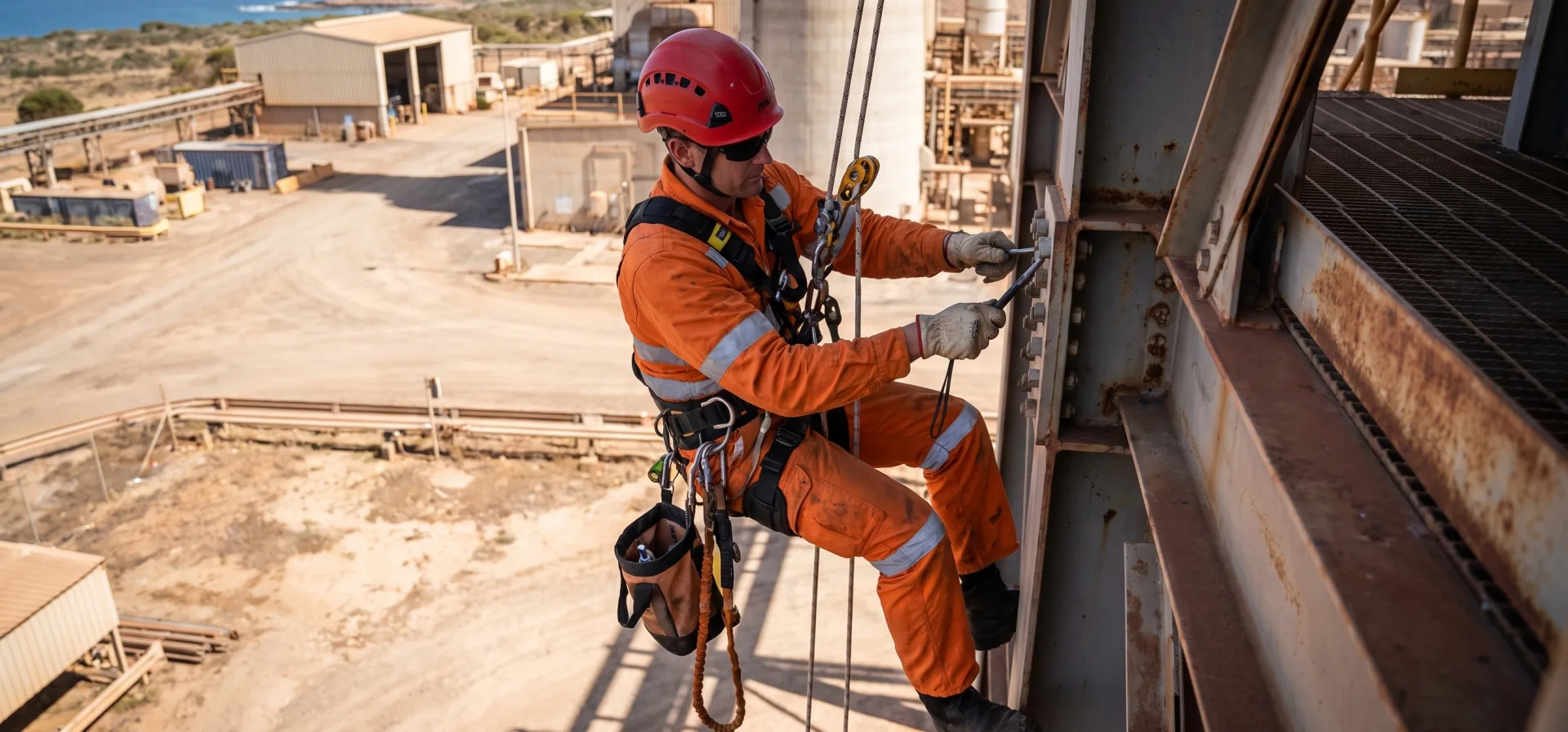
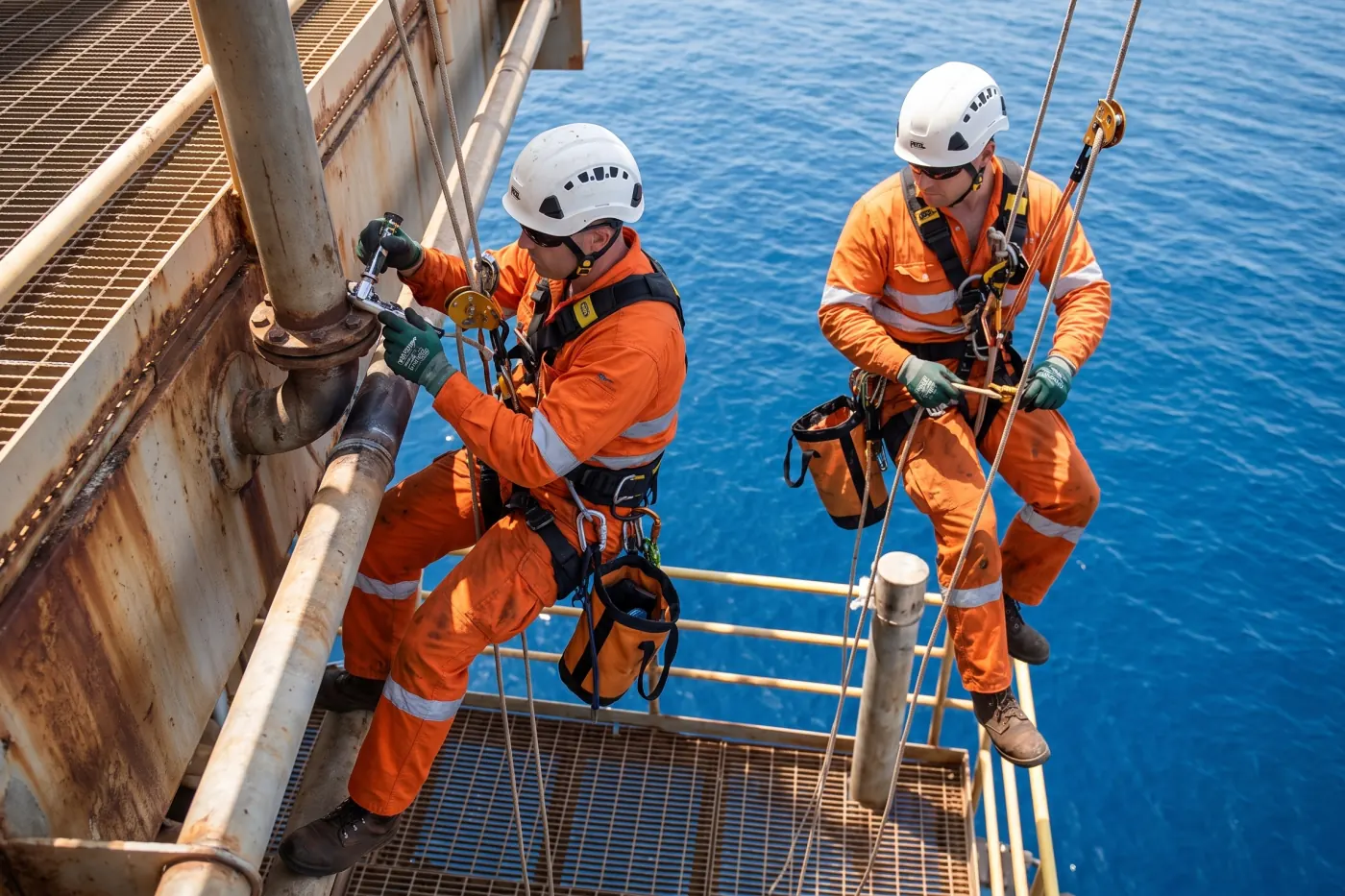
Overseas rope access technicians brought in for an Australian inspection, maintenance or repair campaign generally come in on a Subclass 400 Temporary Work (Short Stay Specialist) visa, where the work is a defined campaign. Resource Visa prepares these applications for Australian resources employers and for the specialist contractors that supply rope access crews.
Every engagement starts with an employer. We don’t take on individuals seeking a visa on their own. If you need help with your own visa, you can search the Register of Migration Agents at mara.gov.au.
The shortage
Why rope access work so often needs overseas technicians
Rope access demand in Australia is lumpy. It peaks around shutdowns, turnarounds and inspection campaigns, when every operator in the region needs certified people on the same weeks. Local crews get booked out, and the gap is usually filled from overseas.
The people hardest to find are the combined roles: rope access technicians who also hold a second certification, such as NDT inspection, coded welding or protective coatings. One person with two tickets can do a job that would otherwise need a second worker on the ropes. That’s exactly why they’re scarce.
Who it’s for
Who this page is for
- Site operators in oil and gas, LNG, mining, ports and power generation, planning an inspection or maintenance campaign at height
- Maintenance and shutdown contractors who’ve won scope that needs more certified technicians than they can staff locally
- Specialist rope access companies bringing in their own overseas technicians to support an Australian contract
The right visa
Which visa applies to rope access work
For a defined piece of work with an end date, such as a shutdown, an inspection campaign or a repair window, the Subclass 400 Temporary Work (Short Stay Specialist) visa generally applies. It covers specialised, non-ongoing work, employer-backed, no sponsorship approval needed.
Normally up to three months in any 12-month period, counting every 400 stay with any employer. Up to six months only in exceptional circumstances, on strong evidence. A specialist who has already spent time in Australia on a 400 in the last 12 months may be granted only the balance, so offshore and FIFO rosters that add up to more than three months a year need a different visa. We establish the specialist’s full 400 history before anything is lodged.
For an ongoing position, the route depends on the occupation. Where the standard 482 doesn’t offer it, a DAMA labour agreement may be the instrument that works. As at [date]: five DAMAs operate in Western Australia. These are the state-wide WA DAMA, which covers all of WA including metropolitan Perth, and regional DAMAs for the Goldfields, Kimberley, Pilbara and South West. The regional agreements are closing to new applications between late October 2026 and March 2027, after which new DAMA labour agreements in WA are expected to run through the WA DAMA. Existing labour agreements and visas continue.
Which one fits depends on the nature of the role, not on preference or convenience. A campaign with a start and finish date is a 400 conversation. A technician you’ll keep on the books is a sponsorship conversation.
The evidence
What makes a strong rope access application
The certification is the core of the argument. IRATA or SPRAT certification at a stated level, backed by logbook hours, is objective evidence that this is a specialised skill rather than general labour done at height. That’s precisely the distinction the Department is assessing.
State the level and the hours
Level 1, 2 or 3, the certifying body and the logbook hours. A Level 3 supervisor is a different case from a Level 1 technician, so describe each person as who they actually are.
Lead with dual certification
A Level 2 technician who’s also a certified ultrasonic inspector holds a combination very few people have. Say it early and clearly.
Show the campaign and the search
Say what structure is being accessed, what the scope is, when it ends, and what local sourcing actually returned. Document what you tried rather than asserting nobody was available.
What a missed inspection window costs
The cost of an overrun and of deferred production. Quantify them.
One point of control
The 400 is the specialist’s application. Run it from one desk.
Your company briefs us once. Your specialist deals with one desk and one document list. We build the business case with you and drive lodgement against your date.
Documents
What you’ll need to pull together
Have these ready on day one:
- Each technician’s certification card and level, and their logbook or a record of hours
- Any second certification (NDT, welding, coatings), with its level
- A work history or CV that shows the relevant campaigns
- The campaign scope, the site and the planned start and finish dates
- A clear description of who employs the technicians and who directs the work on site
- A record of what you did to find the skills locally, and what came back
Lead times
The clock nobody counts: inductions, tickets and medicals
Check which rope access certifications your client’s specification accepts before anyone travels. Then plan for everything around the certification:
- site-specific inductions
- verification of competency for working at height
- confined space tickets
- the medical requirements operators apply to rope access work
These have lead times of days to weeks, and they usually run after the visa, not alongside it. A technician can arrive legally and still be unable to start. Put them in the mobilisation plan from the first week.
Common mistakes
Where rope access applications go wrong
- Described as labour, not as a certification. An application that just says “rope access technician”, with no certification regime behind it, invites the obvious question: why couldn’t an Australian do this?
- Treating a crew as identical. A four-person team with one Level 3 and three Level 1s isn’t four identical cases. The supervisory structure is part of why the crew works as a unit, so describe it.
- Last-minute crew swaps. Rope access crews change late. A substitution after lodgement means a new application for the new person, not an amendment. Lock names as close to final as you can before lodging.
- Mixed-up employer details. When a specialist contractor supplies the crew, every document needs to tell the same story about who employs the technicians and who directs the work.
How we help
How Resource Visa helps
For rope access work:
- an honest read on whether the 400 fits your campaign
- a business case built around the certification evidence
- crew-level applications prepared as a batch against your campaign dates
For contractors who mobilise rope access crews repeatedly, we set up standing arrangements: one nominated contact, batch mobilisations against your shutdown calendar, and a business case you’re not rebuilding from scratch every time.
The process
How a mobilisation runs
Same-business-day triage.
The work, the site, the dates, the fit, and an honest read on whether the 400 is the right instrument.
One document request.
A single consolidated list, not a drip-feed. The one variable nobody controls is how fast your documents reach us, which is why we ask for everything once.
Lodged within two business days of a complete file.
For crews, we agree the lodgement timetable at triage.
Business case assembled and evidenced, your review, then lodgement. That’s how fast we work. Decisions and processing times rest with the Department of Home Affairs.
Ongoing
Standing arrangements
For OEM service divisions and shutdown contractors that mobilise repeatedly: preferred-supplier arrangements, batch mobilisations against your shutdown calendar, one nominated contact, and each specialist’s 400 history checked before every lodgement.
Enquiries after 3pm AWST, on weekends or on WA public holidays are triaged the next business day.
When the Short Stay Specialist visa (subclass 400) is the wrong visa for rope access work
If the technician is really joining your permanent crew, or keeps coming back for campaign after campaign, the 400 is the wrong instrument. We’ll tell you that on the first call and map out the sponsorship route instead. A refusal doesn’t disappear: it becomes part of the specialist’s history on later applications, and the Department looks at how a business uses the 400 over time.
FAQs
Frequently asked questions
For a defined campaign, generally a Subclass 400 Temporary Work (Short Stay Specialist) visa, employer-backed, no sponsorship approval needed. For an ongoing position, the route depends on the occupation.
The subclass 400 (Temporary Work (Short Stay Specialist)) visa is for short-term, highly specialised work in Australia where the skills aren’t readily available locally. A crew on one project is assessed as one case: why this many people, why none locally, and what happens when they leave. Normally up to three months in any 12-month period, counting every 400 stay with any employer. Up to six months only in exceptional circumstances, on strong evidence. A specialist who has already spent time in Australia on a 400 in the last 12 months may be granted only the balance, so offshore and FIFO rosters that add up to more than three months a year need a different visa. The application needs to show the certification level, the shutdown scope and dates, and why the skill can’t be sourced locally.
Check which rope access certifications your client’s specification accepts before anyone travels. Getting on site still depends on each operator’s inductions, verification of competency and medicals, which take time after the visa is granted.
No. The 400 is the specialist’s own application. Your business supports it with an invitation and evidence. There’s no sponsorship approval or nomination stage and no sponsorship obligations, but your business must not let anyone work in breach of their visa conditions.
Generally, yes, provided the application accurately sets out who employs the technicians and who directs the work. That account has to match across every document.
The replacement needs a new application of their own. It isn’t an amendment to the original. Confirm crew names as late as the plan allows, but before lodgement.
Usually, yes. Dual certification narrows the pool of people who could do the job, which strengthens the case that the skill is specialised. Make sure both certifications and their levels are documented.
Same-business-day triage. One document request. Lodged within two business days of a complete file. For crews, we agree the lodgement timetable at triage. That’s how fast we work. Decisions and processing times rest with the Department of Home Affairs. Enquiries after 3pm AWST, on weekends or on WA public holidays are triaged the next business day. Start as soon as the scope and names firm up.
Reviewed by a Registered Migration Agent (MARN 1686595) · Last reviewed [date]
Keep reading
Related pages

Shutdowns & Turnarounds
Bringing overseas specialists in for a plant shutdown or turnaround. What the Subclass 400 covers, how far ahead to start, and what happens when the date moves.

NDT Inspectors
Bringing overseas NDT inspectors in for shutdown inspection campaigns. Which visa applies, and the certification recognition issue that trips employers up.

Oil & Gas
Resource Visa mobilises specialist personnel into Australian oil and gas operations.

Why Resource Visa
Migration advice that understands what’s riding on the project.
A visa application is rarely just forms: behind it sits a shutdown window, a commissioning milestone or a contract deadline.
Resource Visa brings migration expertise together with corporate and commercial experience, so the application is approached in the context of the business requirement behind it.
Our focus is the company bringing the specialist into Australia, not high-volume individual migration.
We understand the environments behind the visa request: shutdowns, maintenance, commissioning and project mobilisation.
Planning a rope access campaign with overseas technicians?
Tell us the structure, the dates and the crew. Twenty minutes for an honest read on whether the 400 fits and what the application needs.
Monday to Friday, 9am to 5pm AWST