

Roles
Bringing OEM turbine and rotating equipment specialists to site
Manufacturer-authorised turbine, compressor and rotating equipment specialists brought to Australia for an overhaul, outage or breakdown generally come in on a Subclass 400 Temporary Work (Short Stay Specialist) visa. Where a manufacturer’s authorisation or warranty regime requires a specific technician, that requirement is the core of the case. Resource Visa prepares these applications for Australian operators and OEM service divisions.
Every engagement starts with an employer. We don’t take on individuals seeking a visa on their own. If you need help with your own visa, you can search the Register of Migration Agents at mara.gov.au.

OEM specialists
Why the manufacturer’s own technician is often the only option
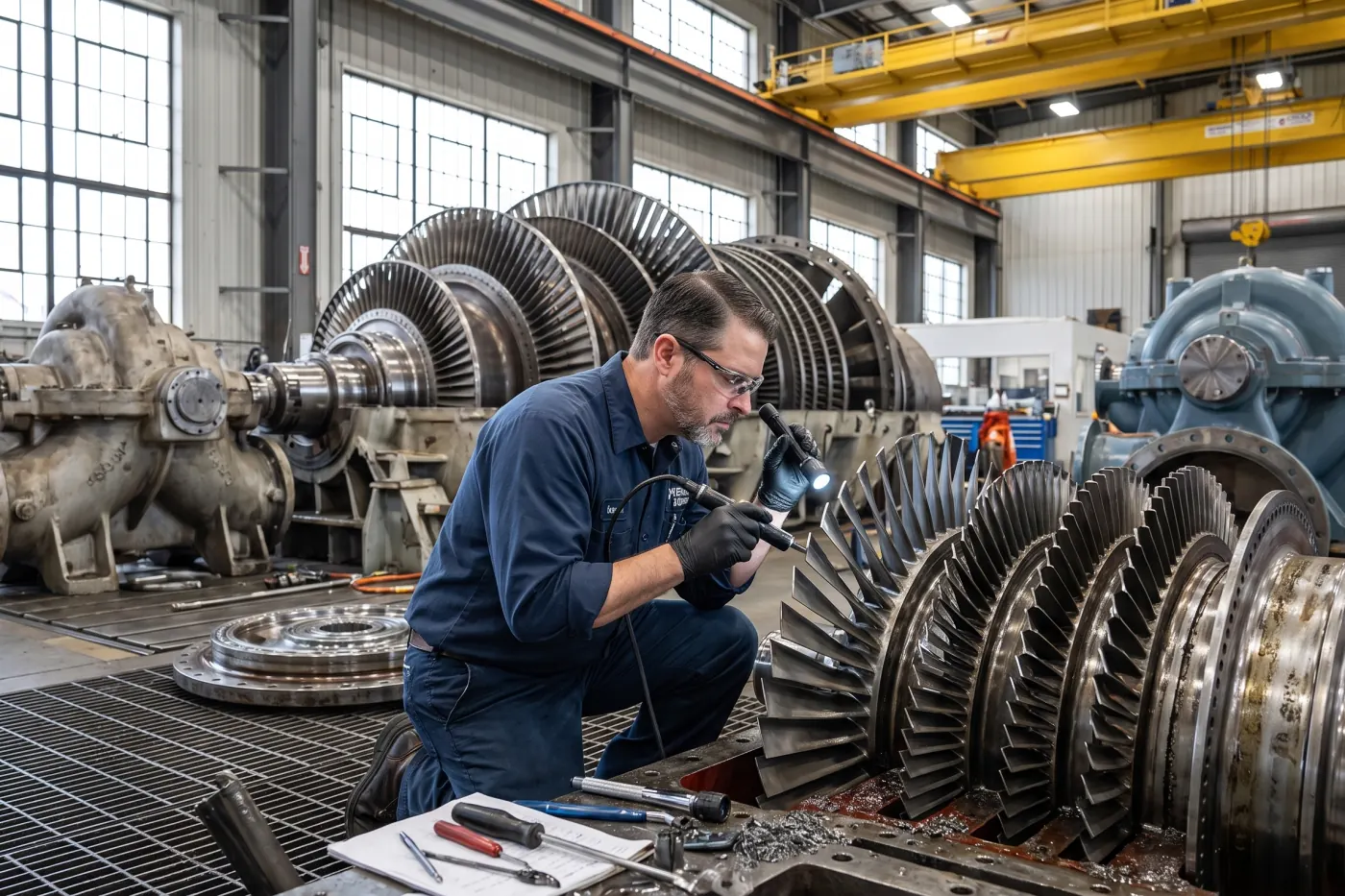
Turbines, large compressors and critical rotating plant are usually proprietary. The procedures, tooling and settings belong to the manufacturer, and warranty terms often say only authorised personnel may do the work. When that equipment needs a major inspection, an overhaul or an urgent repair, the person qualified to do it is usually in the manufacturer’s service division overseas.
That’s the situation the Subclass 400 was designed for: a highly specialised person, needed for a defined job, with a clear end point.
Who it’s for
Who this page is for
- Operators of gas and steam turbines, compressors and critical rotating plant in mining, oil and gas, LNG and power generation
- OEM service divisions sending their technicians to Australian customer sites
- Maintenance contractors managing an outage scope that includes OEM specialists
Scope of work
The work this covers
- Gas and steam turbine overhauls and major inspections
- Centrifugal and reciprocating compressor work
- Large pump and gearbox repair
- Vibration analysis and alignment on critical rotating plant
- Emergency repairs after an unplanned failure
The right visa
Which visa applies to turbine and rotating equipment specialists
For a defined overhaul, outage or repair, the Subclass 400 Temporary Work (Short Stay Specialist) visa generally applies, employer-backed, no sponsorship approval needed.
Normally up to three months in any 12-month period, counting every 400 stay with any employer. Up to six months only in exceptional circumstances, on strong evidence. A specialist who has already spent time in Australia on a 400 in the last 12 months may be granted only the balance, so offshore and FIFO rosters that add up to more than three months a year need a different visa. We establish the specialist’s full 400 history before anything is lodged.
If the relationship is genuinely ongoing, with the specialist effectively working for you year-round, a Subclass 482 Skills in Demand visa may fit better, sponsored by the business that employs the technician or an associated entity. If the specialist stays employed by an overseas business, a 482 needs that business to hold its own sponsorship approval, which is available only for limited purposes such as setting up an Australian operation or fulfilling a contract. Otherwise the worker is employed in Australia.
The evidence
The OEM letter: what it needs to say, and why it matters
The OEM requirement is often mentioned and rarely documented. It takes one email to get. There’s no formal labour market testing for a 400. The application still has to show why the skills aren’t readily available in Australia, and certification, OEM authorisation and licensing usually show that better than a job ad.
Get the requirement in writing
Where warranty terms, a certification regime or a safety case require authorised personnel, ask the manufacturer to confirm it in writing. It should cover the requirement itself, the authorisation level needed, and the named technician.
State the consequence
What happens to the warranty or compliance position if someone unauthorised does the work? That’s the heart of why this person, and nobody local, can do the job.
Put a number on the outage
A turbine out of service costs money every day. Where a contract milestone or liquidated damages apply, quantify them rather than just mentioning them.
One point of control
The 400 is the specialist’s application. Run it from one desk.
Your company briefs us once. Your specialist deals with one desk and one document list. We build the business case with you and drive lodgement against your date.
Documents
What you’ll need to pull together
- The OEM’s written confirmation of the authorisation or warranty requirement
- The technician’s authorisation level, training records and relevant outage history
- The outage scope, the equipment and the dates
- The daily cost of the equipment being out of service, plus any contract penalties
- Who employs the technician (usually the OEM) and who directs the work on site
Repeat visits
Bringing the same technician back every outage
Manufacturers often send the same specialist for every outage at the same site. That makes sense operationally, but it creates a visa pattern the Department can see.
In September 2024 the Department of Home Affairs began applying the 400 more strictly. Longer stays, repeat visits, large groups and roles that look ongoing get closer scrutiny, so every application needs evidence that the work is specialised, short-term and can’t be sourced locally. If one technician is visiting your site several times a year, plan the year’s outages together and check early whether the 400 still fits. A planned outage is planned, so the visa work can be too.
Common mistakes
Where these applications go wrong
- The OEM requirement is asserted, not documented. It’s fixable with one email, yet it often isn’t done.
- Repeat visits aren’t planned. Each outage gets treated as a standalone emergency, and the pattern across the year goes unnoticed until it becomes a problem.
- Incidental licensed work is overlooked. A visa lets someone work in Australia; it doesn’t license the work. Check any electrical or pressure tasks before the technician flies.
- Site requirements are left late. Inductions and permit-to-work competencies take time after the visa is granted.
How we help
How Resource Visa helps
For OEM mobilisations, we build the business case on the manufacturer’s authorisation and the real cost of the outage, not on assertions. For planned outages we work to your outage calendar, so the visa isn’t the last-minute task. For breakdowns, the triage call gives you an honest read on your timeline.
OEM service divisions that mobilise repeatedly can set up a standing arrangement: one nominated contact, batch mobilisations and a business-case template kept up to date.
The process
How a mobilisation runs
Same-business-day triage.
The work, the site, the dates, the fit, and an honest read on whether the 400 is the right instrument.
One document request.
A single consolidated list, not a drip-feed. The one variable nobody controls is how fast your documents reach us, which is why we ask for everything once.
Lodged within two business days of a complete file.
For crews, we agree the lodgement timetable at triage.
Business case assembled and evidenced, your review, then lodgement. That’s how fast we work. Decisions and processing times rest with the Department of Home Affairs.
Ongoing
Standing arrangements
For OEM service divisions and shutdown contractors that mobilise repeatedly: preferred-supplier arrangements, batch mobilisations against your shutdown calendar, one nominated contact, and each specialist’s 400 history checked before every lodgement.
Enquiries after 3pm AWST, on weekends or on WA public holidays are triaged the next business day.
When the Short Stay Specialist visa (subclass 400) is the wrong visa for rotating equipment work
If the same specialist is effectively part of your maintenance team, returning outage after outage, the honest answer may be a 482. We’ll raise it on the first call, not after a refusal.
Turbine down now? Call 08 6243 0379 for same-business-day triage.
Enquiries after 3pm AWST, on weekends or on WA public holidays are triaged the next business day.
FAQs
Frequently asked questions
For a defined overhaul or outage, generally a Subclass 400 Temporary Work (Short Stay Specialist) visa, employer-backed, no sponsorship approval needed.
Generally, no, provided the application accurately sets out who employs the technician and who directs the work on site.
Ask the OEM for it in writing: the certification or warranty requirement, the authorisation level needed, and what happens if unauthorised people do the work. That letter is the core of the application.
Possibly, but plan it. Normally up to three months in any 12-month period, counting every 400 stay with any employer. Up to six months only in exceptional circumstances, on strong evidence. A specialist who has already spent time in Australia on a 400 in the last 12 months may be granted only the balance, so offshore and FIFO rosters that add up to more than three months a year need a different visa. If the relationship is really ongoing, a 482 may fit better.
Call us. Same-business-day triage. One document request. Lodged within two business days of a complete file. For crews, we agree the lodgement timetable at triage. That’s how fast we work. Decisions and processing times rest with the Department of Home Affairs. Enquiries after 3pm AWST, on weekends or on WA public holidays are triaged the next business day. We’ll give you an honest read on your date.
A visa lets someone work in Australia; it doesn’t license the work. Check the tasks with the relevant regulator before mobilising, particularly where electrical or pressure work is involved. In Western Australia, electrical work includes work on electrical machines, instruments and equipment supplied above 50 volts AC, so HV testing and commissioning is generally licensed electrical work. An overseas-qualified electrician needs a skills assessment, a permit to work under supervision and gap training before a full licence.
Yes, and you should. The daily cost of the outage, and any contract penalties, show why the work can’t wait for a local option.
Reviewed by a Registered Migration Agent (MARN 1686595) · Last reviewed [date]
Keep reading
Related pages
Unplanned Breakdowns
Production stopped and the specialist is overseas. What to have to hand when you call, and which work visa fits an emergency repair.

Commissioning & SAT
Bringing a vendor or OEM engineer to Australia for commissioning or acceptance testing. Which visa applies and what the application must prove.
Energy & Renewables
Resource Visa mobilises specialist personnel into Australian power generation and renewable energy projects.

Why Resource Visa
Migration advice that understands what’s riding on the project.
A visa application is rarely just forms: behind it sits a shutdown window, a commissioning milestone or a contract deadline.
Resource Visa brings migration expertise together with corporate and commercial experience, so the application is approached in the context of the business requirement behind it.
Our focus is the company bringing the specialist into Australia, not high-volume individual migration.
We understand the environments behind the visa request: shutdowns, maintenance, commissioning and project mobilisation.
Planning an outage that needs the manufacturer’s specialist?
Tell us the equipment, the dates and who the OEM is sending. We’ll tell you what the application needs, including the letter to ask for.
Monday to Friday, 9am to 5pm AWST